Product Overview
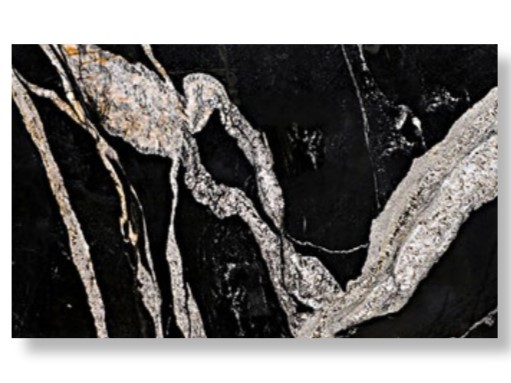
Parahei is a thin marble exterior stone veneer cut from solid natural marble blocks and finished to a veneer-thin sheet. At that thickness the stone stops behaving like cladding and starts behaving like a surface: a sheet is light enough to carry in one hand, it bends to follow a curve, and it can be trimmed to the shape on your drawing. What it does not lose is the face. The veining, tone and movement are the block's own, not a print, a film or a transfer.
That is what makes the panel useful outdoors. Where solid stone would put serious dead load on an elevation, lightweight marble panels for exterior facade work carry the same visual effect with a fraction of the weight. Columns, curved parapets, soffits, entrance surrounds and over-cladding a tired facade are the jobs that come up most often.
Inside, the same sheet covers the places solid stone cannot easily go: cabinet doors, ceilings, curved furniture, cylinders and wall linings. Panels arrive cut to your panel schedule — rectangles for a grid, curved segments for a column, single pieces for a feature — and as an ultra thin marble stone supplier we inspect and pack each order against the drawing you send, so what reaches site is already sized for the wall it is going on.
Production & Custom Cutting
- Block selection. Each marble block is inspected for soundness, colour and figure before it goes to the saw. An ultra thin marble stone supplier cannot hide a flaw in a sheet this thin the way a thick slab can, so blocks with fractures or dull patches are rejected at this stage.
- Slicing. The block is cut on precision cutting equipment down to veneer thickness — thin enough that a sheet stays light and follows a curve, while leaving the stone's own surface intact.
- Setting out and shaping. Panels are trimmed to the sizes on your schedule, and curved segments, ring pieces and individual features are cut to the drawing. Where a shape is unusual, our R&D and production teams work through the setting-out with you before the saw is set, because the figure on the block decides how a curved piece will read.
- Inspection. Our QC team checks every sheet for thickness, flatness, edge condition and face defects, to the same standard on every run. Anything that would show after fixing comes out here rather than on your scaffold.
- Packing. Sheets are interleaved and edge-protected in crates, with the order packed in the sequence it was cut, so a facade package can be opened floor by floor instead of all at once.
Panel Fixing On Site
- Check the substrate. It should be sound, clean, flat and dry, with loose render, flaking paint or old adhesive removed. Repair hollow or crumbly areas before any panel goes on.
- Set out the layout. Mark the panel grid, the joint lines and where the cuts land, and agree the fixing sequence with the installer so the elevation works up evenly and the last sheet is not a sliver.
- Store panels flat and dry. Keep sheets flat and face-protected in a dry area until they are fixed, never on a damp floor, and never stacked with weight on the face.
- Agree the adhesive system. Exterior work needs an exterior-grade system confirmed for your substrate and climate; check coverage, open time and temperature limits with the adhesive manufacturer before starting.
- Fix from the centre out. Press each panel into the adhesive and work from the middle towards the edges to push air out, then check the panel against the line before the adhesive grabs.
- Detail the joints and edges. Decide whether joints are tight, open or shadow-gapped, protect cut edges from chipping, and on exterior work detail the head and sill so water runs off the face rather than sitting on it.
- Work inside the weather window. Fix exterior panels in dry conditions within the adhesive's stated temperature range, and keep the face protected until the scaffold comes down.
- Clean as you go. Take adhesive residue off the face before it cures, using the method the adhesive manufacturer recommends for natural stone.
Applications
- Facade cladding where weight is the constraint. A face this thin adds a fraction of the dead load of solid stone cladding, so an elevation designed for render or a lightweight panel system can carry real marble without new steel. Specify a thin marble exterior stone veneer where the look has to be stone and the structure cannot take the mass.
- Curved facades, columns and drums. This is where lightweight marble panels for exterior facade projects earn their keep: the sheet bends to follow the radius, so a curve can be clad without the wide joints solid stone needs to get around it.
- Soffits, canopies and undersides. Thin and light enough to fix overhead, where a heavy stone panel would need mechanical anchors and a heavier support frame.
- Over-cladding a tired facade. A sound, prepared substrate can be re-faced instead of demolished, which keeps the building in use during the work. Check substrate condition, flatness and fixing method with your installer before work starts.
- Entrance surrounds, reveals and signage walls. Panels are cut to the shapes on the drawing, so openings, door reveals and logo panels can be faced in the same stone as the elevation behind them.
- Wall linings and feature walls indoors. The same sheet goes behind reception desks, along corridors and onto feature walls where a full stone build-up would eat into the room.
- Cabinet doors and joinery fronts. Light enough for standard door hardware and thin enough to sit inside a reveal, so a marble front stays a door rather than becoming a structural panel.
- Ceilings. A stone ceiling is only practical in a thin panel; the sheet fixes overhead without the weight of a stone slab and without losing the natural figure.
- Curved furniture, columns and cylinders. Wrapping a cylinder, a curved console or a bar front is where the give in the sheet does the work a flat slab cannot.
- Re-facing a sound countertop. An existing countertop in good condition can be re-faced rather than replaced, which keeps the carcass and the plumbing where they are.
- What a facade reviewer will ask for. Measured water absorption and the test method behind it, Mohs hardness, flexural strength and compressive strength are the four figures most often requested for an exterior panel. Ask our sales team for the current values for this panel and they will go out with your quotation.
- Where it should not be used. Not for floors, paving, steps or skirtings, not where a surface takes impact, knife cuts or direct heat, and not in standing water or permanently wet conditions. For working surfaces of that kind a marble veneer is the wrong tool, however good it looks on a wall.
Specifications
| Product | Natural marble thin veneer panel |
| Material | Natural marble, cut from solid blocks |
| Thickness | 1–3 mm |
| Form | Thin sheet, cut to size or to a drawn shape |
| Flexibility | Bends to follow curved walls, columns and shaped joinery |
| Surface | Natural marble face; veining and tone vary from panel to panel |
| Edges | Trimmed square, or shaped to the piece |
| Supply | Cut to your panel schedule and drawing |
Quartz Slab Line
Feeding and mixing brings the blend together with the resin and pigment. Forming pours it into moulds of 3050×1450 mm or 3250×1650 mm, where vacuum, vibration, heat and pressure in the kiln turn the mix into a solid slab. Grinding and polishing calibrate each slab to the required thickness and water-polish the face, edge cutting squares it on a bridge cutting machine, and QC and packing close the run. The range coming off those lines covers kitchen countertops, dining tables, desk tops, flooring and wall cladding, in more than 100 engineered quartz colours, with a custom pattern service and OEM work for buyers who want their own name on the slab. Our R&D department keeps adding colours and patterns, and the same production and QC teams look after both families. Wait — I dropped the first paragraph. Let me return the full text. Marble veneer is one of two things we make. The other is engineered quartz slab, produced on our own lines from inspected raw materials: natural quartz aggregates, sands and powder at 92% to 93%, blended with unsaturated polymer resin, pigment and coupling agent at a controlled ratio. Feeding and mixing brings the blend together with the resin and pigment. Forming pours it into moulds of 3050×1450 mm or 3250×1650 mm, where vacuum, vibration, heat and pressure in the kiln turn the mix into a solid slab. Grinding and polishing calibrate each slab to the required thickness and water-polish the face, edge cutting squares it on a bridge cutting machine, and QC and packing close the run. The range coming off those lines covers kitchen countertops, dining tables, desk tops, flooring and wall cladding, in more than 100 engineered quartz colours, with a custom pattern service and OEM work for buyers who want their own name on the slab. Our R&D department keeps adding colours and patterns, and the same production and QC teams look after both families.
What Buyers Say
- American importer. Repeat container buyers talk about consistency between shipments — the second order matching the first on tone and panel quality — and about a schedule that arrives cut the way it was agreed rather than oversize and waiting for a saw.
- European wholesaler. Distributors value being able to offer engineered quartz and a natural marble veneer from the same production, so one relationship covers the working surfaces and the feature walls on a project.
- Australian builder. Project teams tell us the panel earns its place where the structure could not take solid stone and the finish still had to read as marble on the wall.
- The common thread. Buyers are not asking for a miracle material; they want the thickness, the figure and the packing to be what was agreed, and a named contact who answers while the order is running.
Ordering & Delivery
| Lead time | 15–25 days after deposit |
| Quotation basis | Factory price by panel size, thickness and quantity |
| Minimum order | Confirmed against your panel schedule |
| Samples | Arranged through your sales contact |
| Packing | Interleaved, edge-protected crates |
| Shipping terms | Quoted per destination |
| Payment terms | Confirmed on the quotation |
| Documents | Confirm the test data and paperwork your project requires |
Scale & Supply Capability
Bestone has been in the stone trade since 2007 and selling through our website to overseas buyers since 2012. Production is in-house, so standard runs and custom or private-label orders are handled by one team rather than passed between suppliers. We serve distributors, fabricators, contractors and designers across North America, Europe, the Middle East, Southeast Asia and Australia, and we confirm each order in writing before production starts. Send our sales team your quantities, destination and target specification, and we will tell you exactly what we can commit to.
FAQ
How thick is the marble, and what does that mean for fixing?
Between 1 mm and 3 mm, depending on the panel. That is thin enough for the sheet to flex and for one person to handle, so it is fixed as a veneer onto a prepared substrate rather than hung as a stone panel on brackets. It is a thin marble exterior stone veneer, not a tile: the substrate and the fixing system carry it, so agree the adhesive and any mechanical support with your installer before work starts.
Can it be used on an exterior facade?
Yes. Lightweight marble panels for exterior facade work are what this product was developed for — cladding, columns, soffits and over-cladding — provided the substrate is sound and prepared, the fixing system suits the exposure, and the detailing lets water run off rather than sit on the face. Send the elevation and the substrate build-up with your enquiry and we will work through panel direction and joint layout with you.
Can panels be cut into curved or irregular shapes?
Yes. Shaped pieces are cut at production from your drawing, and as an ultra thin marble stone supplier we set the piece out with you before the saw is set, because the figure on the block decides how a curved segment will read. Small adjustments on site are usually made with a fine-tooth blade — try it on an offcut first.
Where should these panels not be used?
Not on floors, paving, steps or skirtings, and not where the surface takes impact, knife cuts or direct heat. Avoid standing water and permanently wet conditions. For working surfaces of that kind, an engineered quartz slab is the right material and a marble veneer is not.
Will the veining match from panel to panel?
Each panel is cut from natural marble, so the figure is the block's own and no two sheets are identical. If a wall has to read as one surface, say so when you order: panels for a single elevation can be selected and numbered as a set, and sending the elevation lets the layout be planned around the figure instead of after the panels arrive.